
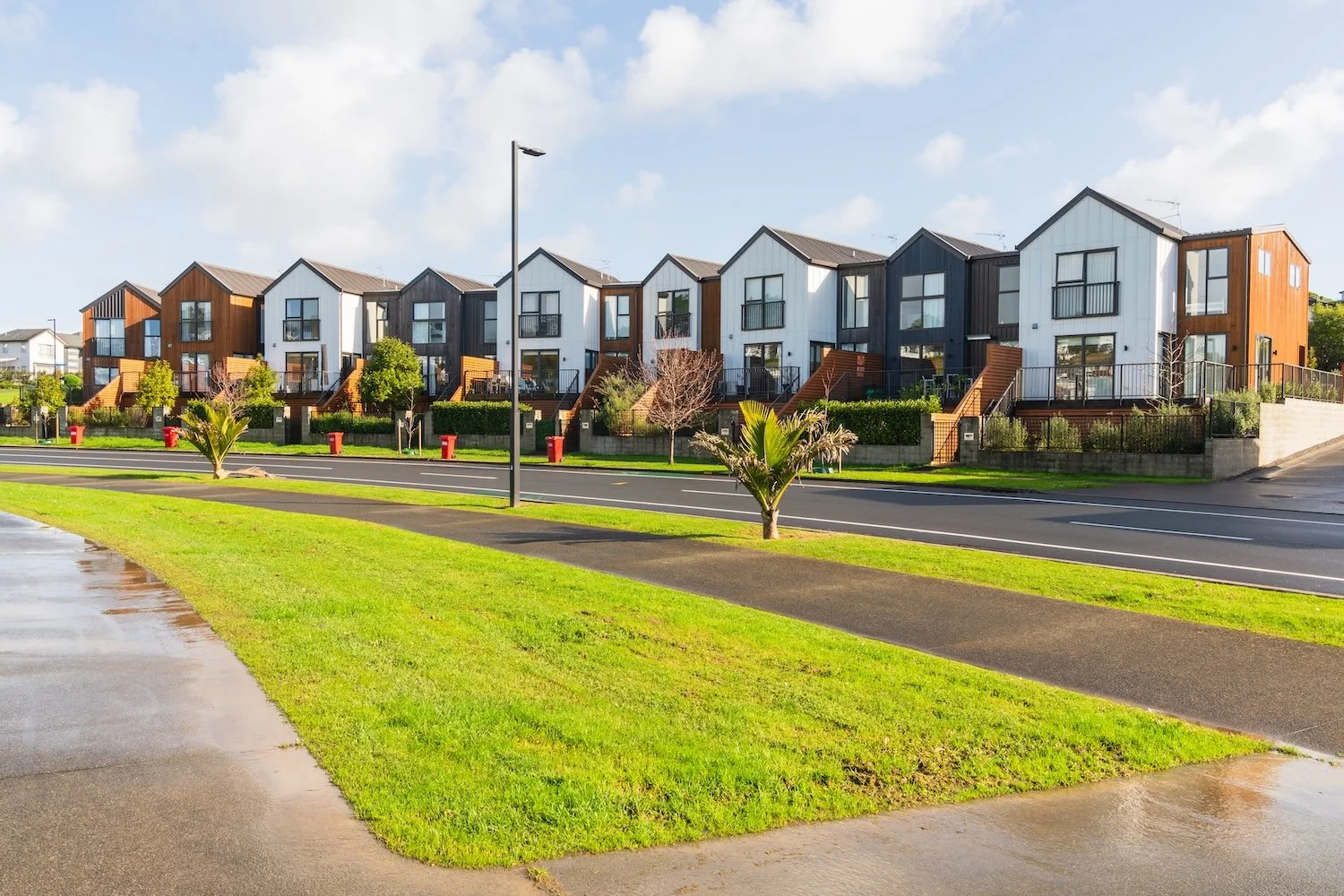
The gap between government capacity and housing need is widening — and a new approach to investment is emerging to help fill it.
By Simba Marekera , Global Head of Private Markets - Brightlight
If you own property in New Zealand, your investment has probably done well. The national median house price sits at $761,000 as of August 2025, and across most regions prices have held steady or continued to climb. But behind that headline number is a story that should concern every investor in this country — not just because of what it means for housing, but because of what it means for the role that capital plays in a functioning society.
Housing affordability in New Zealand has deteriorated structurally, not just cyclically. Stats NZ’s 2025 Housing in Aotearoa report makes this clear: despite a small uptick in the home-ownership rate — the first since the 1990s — over 604,000 households do not own their home, and more than 1.5 million people live in rental housing. In regions like Waikato, the price-to-income ratio has reached 6.4:1. A median-income household there would need an income of around $140,000 to comfortably service a median-priced home. The regional median is $116,722.
If current trends hold, the time it takes a median-income household to save a deposit could stretch from 13 years today to 28 years by 2045.
But this isn’t simply a story about prices being too high. It’s about a fundamental misalignment between where housing is being built, who it’s being built for, and what the country actually needs. Nationally, the majority of new housing supply is delivered at price points that sit above the affordability thresholds used by the Ministry of Housing and Urban Development, placing it out of reach for median‑income households.
Nationally, the pipeline skews toward investor-oriented typologies — larger homes in greenfield subdivisions that attract capital but do little to house the nurses, teachers, and tradespeople who keep communities running.
The pressure shows up in the government data too. While trending downwards since March 2024, As of February 2026, close to 25,000 applications were live on New Zealand’s Social Housing and Transfer Register – virtually unchanged for over 12 months. And housing doesn’t exist in isolation: research from the Social Wellbeing Agency shows that households facing high transport costs - often $5,000 or more per year - are significantly more likely to report low life satisfaction. When infrastructure lags behind population growth, the social cost compounds through longer commutes, reduced labour force participation, and poorer health outcomes, particularly for Māori and Pacific families.
The capital gap - and who fills it
So where does this leave investors? Historically, most private capital in New Zealand housing has focused on capital gains — buying and holding, speculating on price appreciation. That strategy has worked well for those who got in early and those who have the ability to withstand the volatility and risk that come with it. For investors that are looking for more stable income oriented returns that are linked to housing that the country needs, there have been limited options.
Now there are opportunities for private capital that works complementarily with government - not in competition with it - to play a unique role to play in closing the gap between what the market delivers and what New Zealand needs. The returns are real. The social outcomes are measurable.
Global insight. Local action.
At Brightlight, we operate across multiple markets — New Zealand, Australia, Asia, and the United States. That global vantage point matters, because the challenges New Zealand faces in housing and infrastructure are not unique. What is unique is the opportunity to apply the lessons learned in more mature impact investing markets to a New Zealand context in deep collaboration with local partners.
We don’t see ourselves as coming in from outside. Our role is closer to what you might call the plumbers in the walls - the enabling infrastructure that helps capital flow to where it’s needed, working alongside advisors, institutional investors, government, and community organisations rather than ahead of them. The heroes in this story are the organisations dealing with the real, heartbreaking, wicked problems on the ground. Our job is to help connect the capital they need to the outcomes they’re working toward.
That local partnership dimension is not incidental - it’s central. You cannot solve affordable housing in New Zealand, even with the best global frameworks, without working alongside the communities most affected. The data tells us that people in housing crisis in New Zealand are disproportionately Māori and Pasifika — around 60 to 70 percent of those on the Social Housing Register. That means the measures of success need to reflect those communities, not just the priorities of investors. Place-based investing, informed by local partners and grounded in genuine cultural engagement, is not a nice-to-have. It’s how you ensure the capital actually lands where it should and generates the returns required to keep it there.
Brightlight provides institutional-quality investment opportunities in this space — available directly, or via our partnership with Catalist. Our focus in New Zealand right now is on housing and infrastructure: addressing the gap that government alone cannot close, and that purely market-driven capital has not been structured to fill.
In the weeks ahead, we’ll be sharing more — including a closer look at how we’ve approached this, and an invitation to join us for a deeper conversation. If you’d like to hear more in the meantime, get in touch.
Watch this space.
Sources
Stats New Zealand, Housing in Aotearoa New Zealand: 2025
REINZ Monthly Property Report, August 2025
MSD Housing Dashboard, February 2026
Social Wellbeing (Investment) Agency, Transport Resilience Modelling, 2023