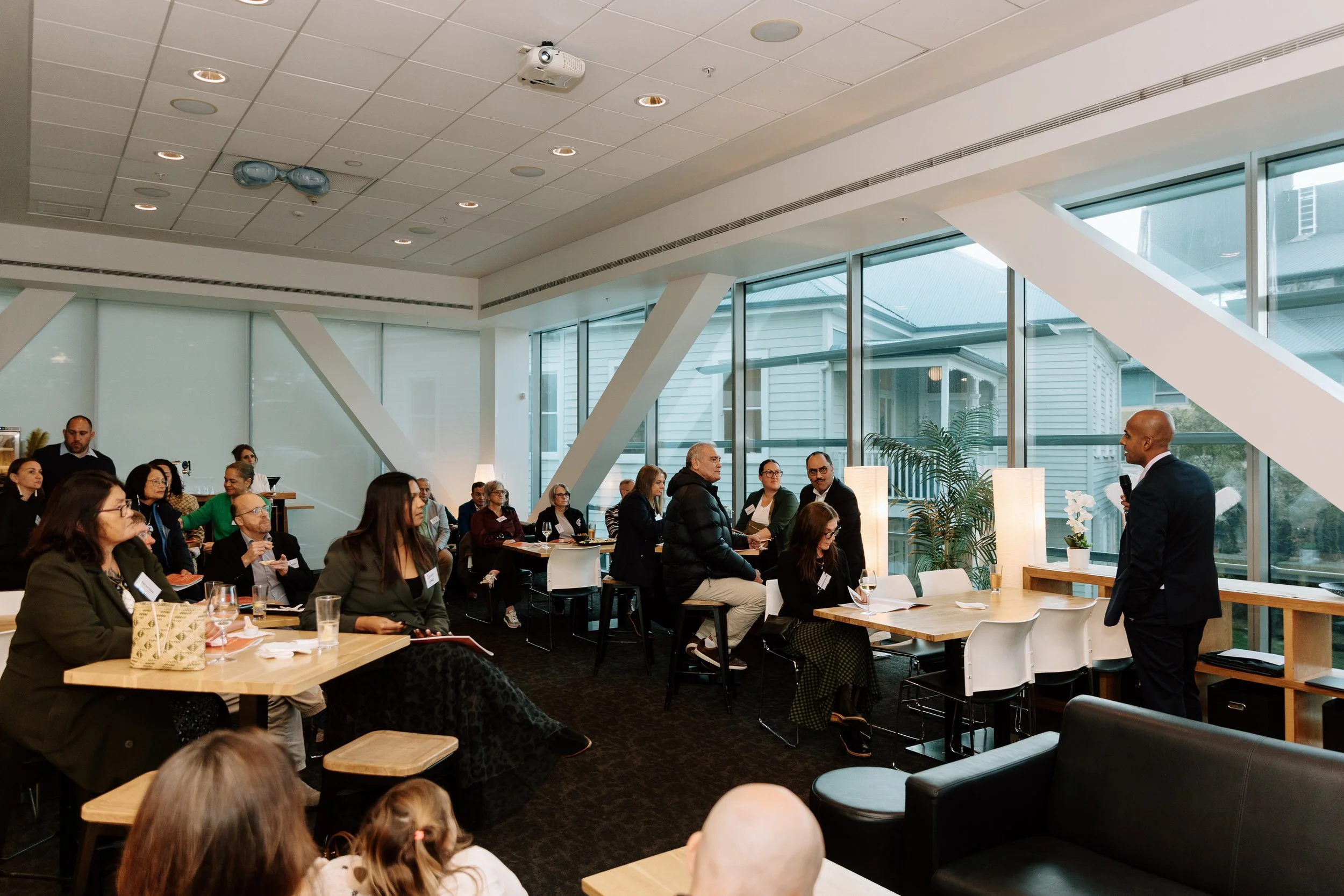
This week, Te Puna Hapori launched its first Impact Report at an event in Hamilton, marking a milestone for place-based investing in Aotearoa New Zealand.
Te Puna Hapori means a wellspring for communities, a source of life that sustains the people around it. The name captures the intent behind the platform: to help organisations doing the hard, patient work of delivering community services draw on capital that is steady, flexible, and genuinely on their side.
Where it started
Te Puna Hapori began in 2019, through a collaboration between Brightlight and Trust Waikato, a community trust focused on transformational change for the people and places most in need. Trust Waikato invited Brightlight to build an investment platform measured by community outcomes as well as long-term financial outcomes. That invitation became Te Puna Hapori.
Generate KiwiSaver Scheme backed that early vision, becoming the platform's first institutional investor in 2022 through the Te Puna Hapori Verdi Social Housing Bond, helping fund homes for 39 families. In the years since, the platform has grown into a portfolio spanning six sites and four community housing providers, delivering both social and transitional housing across the country.
How the platform works
Te Puna Hapori provides debt, both mezzanine and senior, to proven community organisations so they can acquire completed community infrastructure. It invests in assets that are already built and already home to the people they were designed for, meaning the social impact begins on day one and the financial risk is far lower than development finance carries.
That discipline is deliberate. Investments are secured by first or second-ranking mortgages, with revenue substantially backed by long-term Crown contracts with agencies such as the Ministry of Housing and Urban Development, the Ministry of Social Development, and Oranga Tamariki. An investment committee made up of senior Brightlight team members and independent external members oversees every decision.
What sets the platform apart is who owns the asset at the end. Brightlight does not seek to own the housing; the natural long-term owner is the community organisation that stewards it.

The year in review
This first report covers calendar year 2025 and spans six sites and four service providers, delivering both social and transitional housing:
437 people housed across six sites
404 people accessing wraparound support
73% identifying as Māori
92% retention in social housing
46% retention in transitional housing, reflecting its role as a deliberate bridge to more stable, longer-term housing rather than a permanent placement
Residents include whānau, rangatahi (youth), and people released from prison or on remand, housed across 124 bedrooms with a mix of single and dual-occupancy rooms.
The providers behind the numbers
Four community organisations deliver services across the portfolio:
The Salvation Army provides long-term social housing for singles and couples on the Ministry of Housing and Urban Development register, alongside wraparound support including addiction and mental health services, budgeting assistance, and food services.
Ka Puta Ka Ora Emerge Aotearoa delivers social housing for low-income tenants, supported by a high-participation annual tenancy survey that has directly shaped improvements to privacy, pet policies, and community development support.
Grace Foundation runs New Zealand's largest Bail Residences Recovery programme, providing transitional housing and rehabilitation-focused wraparound support, including health services, education, life skills, and employment training, for people released from custody on bail.
Mana Services supports rangatahi (youth) through transitional housing grounded in a kaupapa Māori framework, pairing each young person with a dedicated Kaiārahi (navigator) to help them build toward independent living.
Guided by partnership, not authority
The report is shaped by a commitment to partnership with local communities and to the values of Te Tiriti o Waitangi, particularly rangatiratanga (self-determination and autonomy) and manaakitanga (care, hospitality, and mutual respect).
In practice, this means Te Puna Hapori starts from the assumption that community service providers know their communities and how best to serve them. The Strategy's role is to provide the resources and the disciplined financial structure, not to define the conditions under which that work happens.
Reporting plainly, including where the picture is mixed
This first report is as much a commitment to accountability as it is a celebration of impact. Outcome data collection proved the most significant challenge in producing it. Partner organisations sit at markedly different stages of measurement maturity, and where outcome data was inconsistently collected, the report says so plainly rather than smoothing over the gaps.
Over the coming year, Brightlight will work with providers to standardise how outcome data is captured, focusing on residents' subjective wellbeing, whether stable housing has enabled progress toward other life goals, satisfaction with services, and self-reported changes in resilience, skills, and cultural connection.
Thank you
We're grateful to the investors who have joined the Te Puna Hapori journey to date, and especially to Trust Waikato, whose early leadership helped initiate the strategy, and to Generate KiwiSaver Scheme, who backed our first project. We look forward to continuing this work with existing and future partners.