
The Structural Housing Gap in Aotearoa: Why Private Capital Matters
By Simba Marekera, Global Head Private Markets
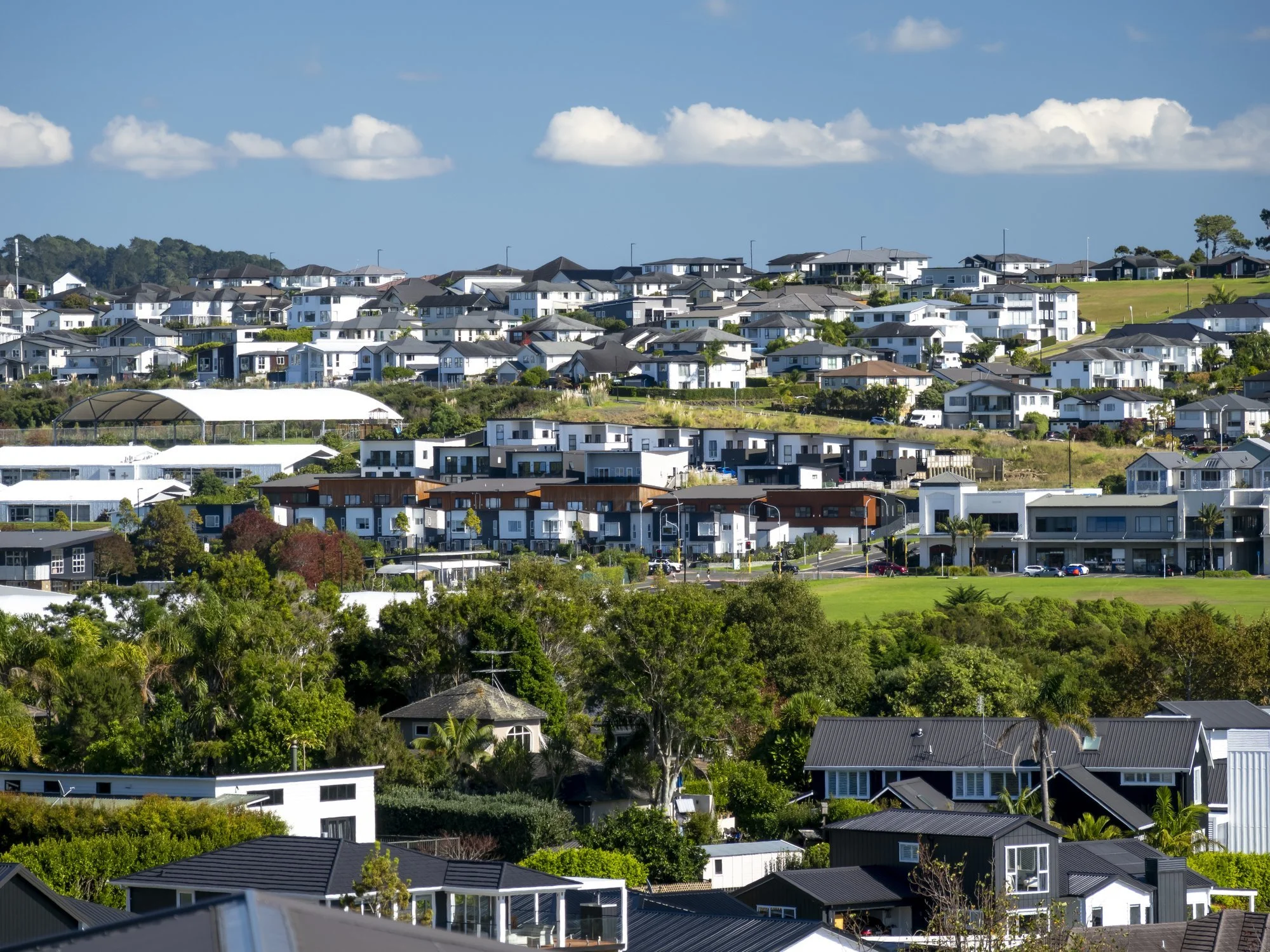
There are two ways to read New Zealand's housing numbers — the cyclical one most market commentary takes, and a structural one that capital actually needs to be in. The difference matters.
The first way is the one most market commentary takes — month-on-month tracking, regional movements, the question of whether prices are up or down or holding. That's the cyclical view. It's necessary, but it isn't the conversation that capital needs to be in.
The second way is structural.
The numbers behind the structural view
As at the end of August 2026, the Ministry of Social Development reported 18,789 households on the Housing Register in Aotearoa, and another 5,208 households on the Transfer Register — people already in social housing who have applied to move because where they are isn't working for them. Together, that is 23,997 households on the Social Housing Register. In the same month, only 780 households were housed. New applications onto the register: 2,034. Two thousand on; eight hundred housed. The maths runs in one direction.
Behind those numbers, of the 22,602 main applicants whose ethnicity is recorded on the register, 46% identify as Māori. Forty-six per cent. This is not a market correction we're navigating. It is a multi-decade structural shortfall, and the proportion of Māori main applicants reflects long-standing inequities in housing access and wealth — a pattern of outcome, not a difference in need.
There were 441 households in emergency housing at the same date — single people in motels, mostly, with 366 children among them. That number has sat in the same narrow band for a year now, after the steep fall that followed the tightening of emergency-housing eligibility; the conversation about where the people who used to qualify are now sleeping is a separate, harder one. The Ministry of Social Development still paid out $3.2M in emergency housing grants in August 2026 alone.
I'm walking through these numbers slowly because the size of the structural gap rarely gets stated plainly. It gets aggregated, smoothed, regionalised, and softened into stories about supply and demand. The harder truth is simpler. Aotearoa has a multi-decade shortfall in housing for the people the market doesn't naturally serve — rangatahi exiting the justice and care systems, families leaving abusive homes, single people on low incomes who no longer fit the shape of the contemporary rental market, regions where the rental market is broken in particular ways. More than half (55%) of applications on the Social Housing Register require a one-bedroom dwelling. That detail tells you what the absent stock actually looks like.
Why no single actor can fix this on their own
Here is the part I want to be plain about. None of the actors who have historically been expected to fix this can fix it on their own.
Government can't build fast enough. The Ministry for Cities, Environment, Regions and Transport (which absorbed the Ministry of Housing and Urban Development in July 2026), the Ministry of Social Development, and Oranga Tamariki run good contracts and fund good outcomes, but they can't sufficiently fund the equity, mezzanine, or subordinated debt that lets a community housing provider acquire and hold a building at the same time.
Philanthropy is too small. Generous as it is, philanthropic giving in this country runs to a few billion dollars a year spread across every cause; the housing gap alone is multi-billion.
Banks, working with senior debt, can't always accommodate the kind of flexibility community-led projects need: shorter operating histories, blended Crown-and-rental revenue, place-based covenants that wouldn't fit a typical loan book. The appetite that does exist on the bank side often runs into capital ratios long before it runs into deal flow.
That's the gap. Not a crisis to be fixed by one heroic actor — but a structural absence that requires several different kinds of capital to coexist around the same deal. One of those kinds is patient, flexible, mainstream private capital. Place-based, community-aligned, and disciplined.
Where local capital comes in
The appetite for that kind of capital now exists.
In Mindful Money and RIAA's 2025 Voices of Aotearoa survey, 76% of New Zealand investors said they would invest in a fund that aimed only to create positive social or environmental impact: 60% if the return was similar to traditional investments, 16% even if it were lower. Only 9% said they would not invest. Among the issues those investors say they would prioritise, social and community infrastructure (which the survey defines to include affordable housing) sits at 76% support — just behind healthcare (81%) and healthy rivers and oceans (80%). That isn't a niche signal. The structural problem and the structural appetite are pointing at each other.
What's been missing is plumbing.
That's the role of capital in this system, and I say it as the smallest statement of all. The community organisations doing the work alongside Crown agencies and the senior banks — they are the heroes. They build, they tenant, they walk alongside whānau through long, hard journeys. Capital's job is to fill the missing piece of the cap stack so that work can keep happening. Quietly.
On the broader question — what's New Zealand's biggest structural opportunity? — the most useful thing I think I can say is that the answer might be itself. We have the data, the demand, the providers, and the gap. Investing back into Aotearoa with this kind of intent is one of the few questions in our market where the answer genuinely is up to local capital. What's been missing is the patient, reliable while flexible plumbing in between.
We welcome the conversation, and the challenge, on any of it.
— Simba Marekera
Global Head of Private Markets, Brightlight